Pheasant Shooting in the US
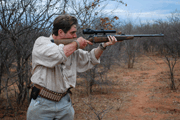
 When we (in Europe) shoot pheasant we tend to do it by driving birds from cover over a line of guns – something popularized in these isles by Victoria’s consort Albert and his son Albert Edward (later Edward VII). Americans pheasant ‘hunters’, some two million of them, still shoot pheasants the ‘old fashioned’ way – some might say the proper way – over pointing and flushing dogs. They do this, in the main, on state owned ground by means of a licensing system which is tightly regulated (with signficant state to state variation) but which offers cheap sport to millions.
There are several types of pheasant hunting in the US:
1) ‘Preserve’ shooting over some kind of dog (pointing or flushing)
2) Driven - but not as in the UK, the birds are not raised and released in the summer later to be driven in the autumn, but rather the birds are ‘flighted’ on the day and at the time of the shoot;
3) Hunting wild birds with dogs – either flushing or pointing – usually involving a couple of hunters and one or more dogs ranging fairly wide (an activity which may happen in fairly remote area, or, just off the roadside!
4) Organized, massive drives, involving large numbers of shooters who drive typically with dogs and some hunters in posted positions.
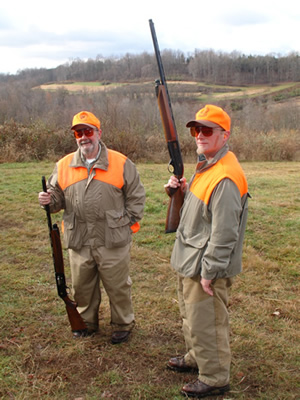
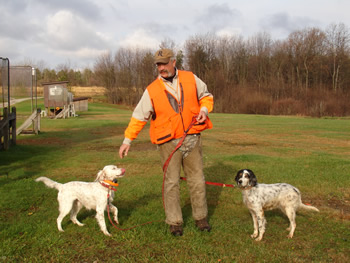 It is a very different culture to ours, not least perhaps because US Game wardens are often armed and have similar powers to the police (indeed, they are in effect a form of police service). State game departments will have a significant staff of scientists too and other professionals working for the general benefit of the habitat and the hunting community. They are funded by license subscriptions in the main. When you hunt (as both bird and deer shooting are usually termed), you must display your license on your person and you will have to wear a prescribed number of square inches of orange clothing (varying from state to state) to make sure you are not accidentally shot by other hunters. This may sound OTT, but when you are in the woods on opening day with what may be a lot of inexperienced or occasional guns it makes a lot of sense.
Serious US hunters tend to be extremely expert with regard to working their dogs (and their pointing dogs in particular). I would say that to most of the pheasant shooters I know in the States the dogwork – both the art and science – is more important than the actual shooting (which is not quite the art there that it is with us). Americans are, however, proud of their heritage of accessible sport. It was quite an important part of the ‘American Way’ in the early history of the country. Legislators were very well aware that shooting was not always something ordinary people could do easily and there was a deliberate policy of making it as open as possible. Shooting also provided an important part of the diet for early settlers.
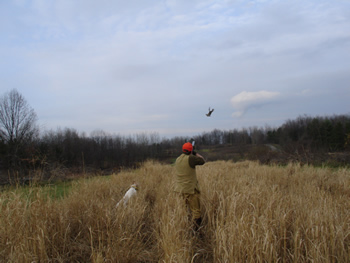 The thing that turns on most modern US pheasant hunters is ‘rooster’ shooting – the shooting of what we would call cock birds. You may hunt these on private ‘put-and-take’ preserves, as well as wild birds on state game lands as discussed. The preserve shooting – increasingly popular because it is accessible and easy – is usually controlled by a ‘guide’ who handles the dog work.
The wild bird shooting is another matter and, typically, quite a logistical challenge. I have driven hundreds, indeed, thousands of miles across the US with friends just to bag a few birds. The US shooters are much less concerned by numbers than we are. They can be quite shocked by our numbers game. Bags are strictly limited in most states and may be no more than a few birds per gun. This does not seem to affect anyone’s fun much, though – so much effort goes into each bird they seem to be more appreciated. There is a lot of work done on the conservation front by organizations like Pheasants Forever (with a membership of 125,000 including 20,000 youth members) and its 750 ‘Chapters’ as well as by State Game Departments as discussed.
This is what Pheasants Forever (PF) say about themselves:
“Pheasant hunting is a time-honored outdoor tradition…It's a family activity. It helps form new friendships and strengthen existing ones. Bird dogs become more than just a pet, they become part of the family. Pheasant hunting requires knowledge, skill and as the season wears on, a battle against the elements. At times, you will succeed and feel the thrill of sliding that hard-earned bird into your game vest, and at times you will understand why they call the ring-necked pheasant the King of the Gamebirds. And finally, those skillful or lucky enough to harvest a rooster pheasant find they make excellent table fare.”
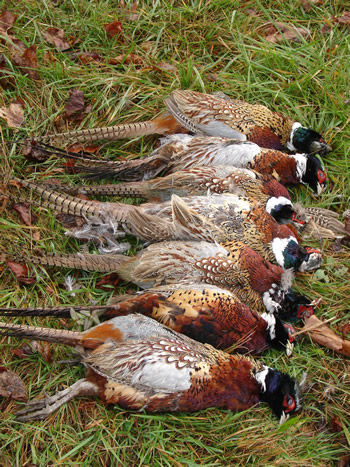 Many US shooters will take a ‘Hunter’s Education Course” (which may be a requirement in some states). Young shooters are particularly encouraged. The Pheasants Forever The Ringnecks Program is
“dedicated to introducing youth to hunting, shooting sports and outdoor conservation through youth events, education, community service and cooperation with both governmental and non-governmental partnerships. Through a variety of programs, youth will gain knowledge, learn skills and develop a land ethic necessary to be responsible hunters and conservationists. As they grow up, they can in turn pass on the outdoor traditions of their youth to future generations.”
Pheasants Forever notes the following advice with regard to gear – it gives you an idea of just how different things are in the States compared to here:
1) Know your state laws in regards to wearing blaze orange. You should always wear at least a blaze orange cap and hunting vest so your party members can clearly see you at all times.
2) Invest in a good pair of boots. While hunting pheasants you will traverse a wide range of terrain that will put wear-and-tear on your feet if you're not properly prepared. Nothing will end a hunt more prematurely than blistered and sore feet.
3) Know the weather conditions in which you will be hunting and dress in layers that can be added or removed accordingly. Stay away from cotton products that will retain moisture. Instead, wear polypropylene and fleece clothing that will wick sweat and rain away while retaining heat.
4) Wear brush pants or field chaps. These durable leggings will keep you dry and free from stickers and thorns while traveling through thick cover.
5) Use a shotgun you are comfortable with. Anything from a .410 to a 12 gauge can be effective in bagging a rooster.
6) Be aware of where you'll be hunting in regards to the use of lead or steel shot. Some areas require that only steel shot be used.
7) Be sure to check out Pheasants Forever Marketplace for unbeatable deals on all of the gear you'll need to have a great day in the field! [being the US there is always someone trying to sell you something]
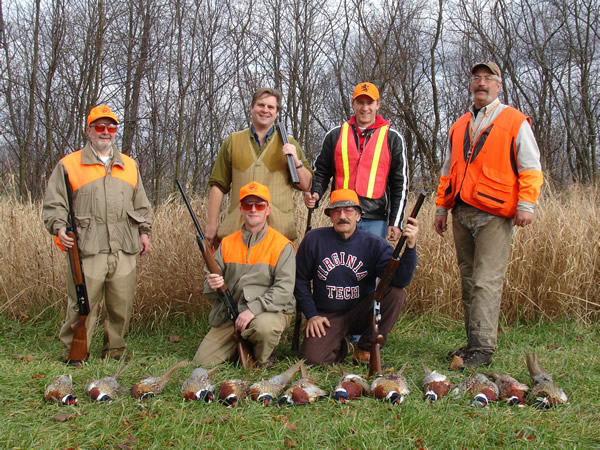
And on the subject of where to hunt:
1) Pay attention to your state's roadside counts to know where the highest concentrations of birds are located.
2) Understand the different habitat needs of a pheasant and how seasonal changes can influence where the birds are located.
3) Get off the beaten path of interstate highways.
4) Join a Pheasants Forever chapter and make friends. More than likely, you'll get invited to hunt together come autumn.
5) Recognizing overlooked spots - Ask permission of private landowners adjacent to public lands.
Birds and bores
The Chinese ringneck is by far the most common bird in the states, as far as guns are concerned, most use 12 bore repeaters with heavy loads (both available from stores like Wallmart at modest cost), though purists may use 20 bore over and unders and even the occasional side by side. A few ersatz driven shoots have been created, but the core of American pheasant shooting is the walk-up as was popular here 150 years ago (as will be evident if you ever look at old shooting prints).
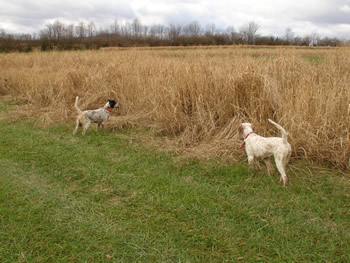 The first category is found in many states, the second is for the US carriage Trade and organised by private clubs. The third is pursued in those states such as Dakota and Nebraska that have a significant wild pheasant population – it’s big, open country.